
Stadionplan Rhein Energie Stadion Sitzplan Reihen
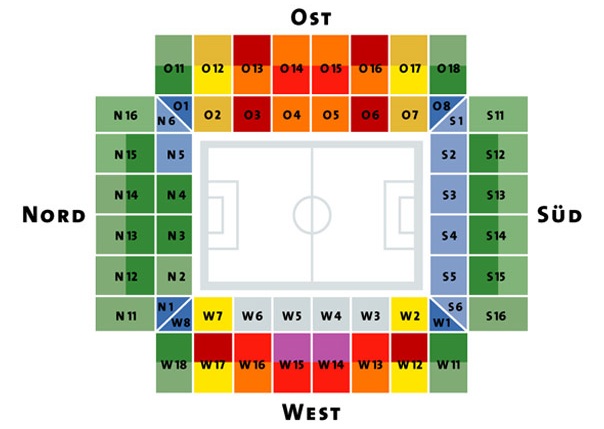
So, there I was, standing in the pouring rain, holding a soggy piece of paper that was supposed to be my Stadionplan for the RheinEnergieStadion. I had spent ages trying to decipher the tiny print and figure out where my seat was, only to find out that I was standing in the wrong sector entirely. Talk about a dampener on my football enthusiasm!
But let's rewind a bit. You're probably wondering why I was in this pickle in the first place. Well, my friend, let me tell you, finding your way around a stadium seating plan can be as confusing as trying to understand German when you're still learning the basics. It's a jungle out there, full of mysterious terms like Block, Reihe, and Sitzplatz. But fear not, dear reader, for I have navigated these treacherous waters and lived to tell the tale.
Block, Reihe, Sitzplatz - Oh My!
Let's start with the basics. When you're looking at your Stadionplan, you'll see that it's divided into sections called Blöcke. These are like the chapters of a book, each one containing a bunch of rows. Now, here's where it gets a bit tricky. Each block has its own set of rows, which are called Reihen. So, if you're in Block A, Row 10, you're in a completely different part of the stadium than someone who's in Block B, Row 10.
Must Read
But wait, there's more! Each row is made up of individual seats, or Sitzplätze. These are numbered too, usually starting from 1 on the left (when you're facing the pitch) and going up to some number that's probably in the hundreds. So, if you're in Block A, Row 10, Seat 50, you're sitting right in the middle of all the action (well, hopefully - it depends on the stadium's design, of course).
Now, you might be thinking, "That's all well and good, but how do I know which block, row, and seat I have?" Well, my friend, that's where your trusty Stadionplan comes in. It should have your seat number on it, along with the block and row. If it doesn't, then you've probably got a fake, and I suggest you demand a refund immediately!
But Wait, There's More!
Alright, so you've figured out your block, row, and seat. You're feeling pretty proud of yourself, right? Well, don't get too comfortable, because there are a few more things you should know.
First off, some stadiums have different Kategorien of seats. These are usually color-coded on the Stadionplan and can range from the cheap seats (where you might be sitting next to the team's biggest fans, who are also the loudest and most enthusiastic) to the VIP areas (where you might be sitting next to the team's biggest sponsors, who are also the wealthiest and most well-connected).
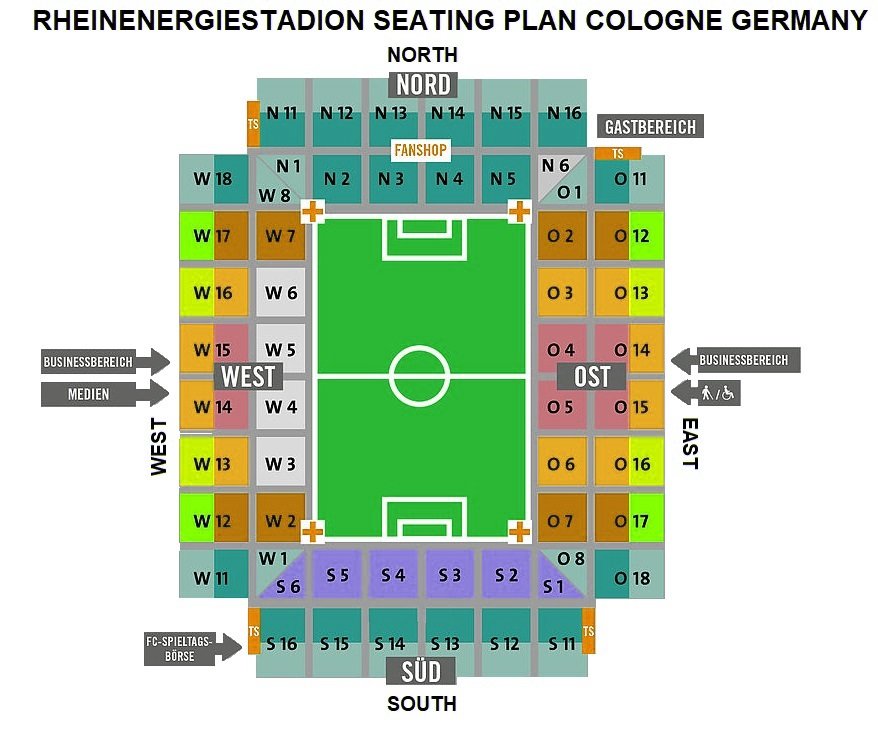
Second, some stadiums have Stehplätze - that's right, standing areas. These are usually cheaper than the seated areas, but they can be a bit of a squeeze, especially if the team is doing well and everyone's jumping up and down. If you're not a fan of being squished, you might want to stick to the seated areas.
Finally, some stadiums have Overhang. This is when a higher row is directly above a lower row, which can make it a bit difficult to see the pitch if you're sitting in the lower row. It's not a deal-breaker, but it's something to be aware of if you're a tall person or if you like to see the game without any obstructions.
You're All Set!
So there you have it, folks. With these tips under your belt, you should be able to navigate any Stadionplan like a pro. No more standing in the rain, wondering where your seat is. No more missing out on the action because you're sitting in the wrong sector. You're ready to enjoy the game in style!
Just remember, the most important thing is to have fun. Whether you're sitting in the cheapest seats or the most expensive VIP area, you're there to enjoy the game. So, grab your scarf, find your seat, and let's hear you cheer!
Until next time, this is your friendly stadium seating plan guide, signing off.